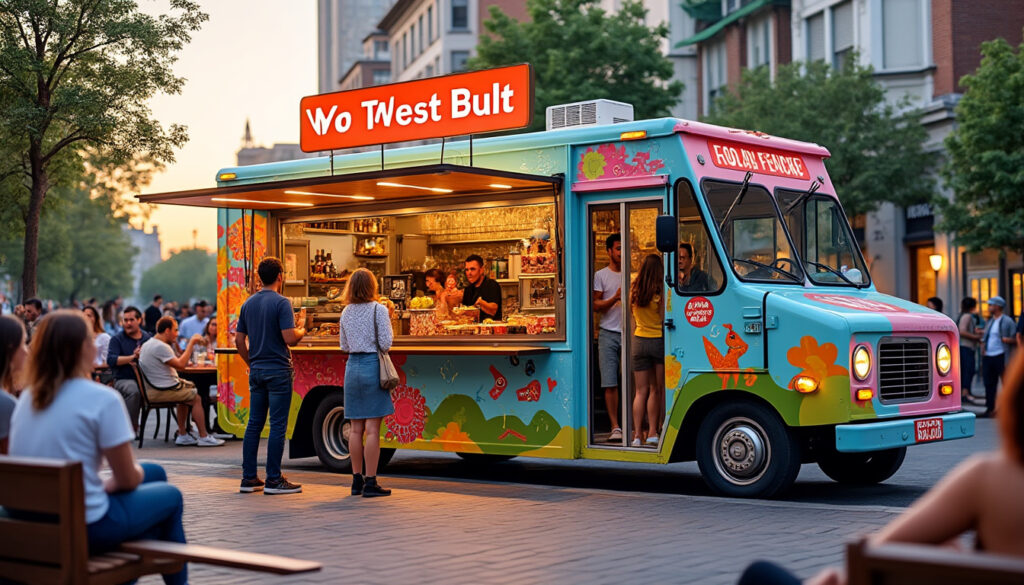
The U.S. food truck scene is a vibrant, bustling marketplace, projected to hit $2.8 billion in 2026, with nearly 48,400 mobile kitchens vying for the attention of hungry crowds. Yet, for many dedicated owners, the journey to consistent profitability and standing out in such a dynamic environment can feel like navigating a maze. It’s a unique challenge: unlike traditional restaurants, your business is constantly on the move, requiring customers to rediscover you almost daily. This inherent mobility, paired with operating costs that have climbed 7.9% between 2020 and 2026 and the fact that most owners manage their own marketing, means that merely serving excellent food isn’t always enough to secure success. To thrive, a strategic approach that elevates every aspect of your brand, particularly your visual aesthetic, is paramount.
A successful food truck’s allure extends far beyond its menu; it encompasses a powerful visual identity that draws customers in, builds recognition, and fosters loyalty. From the striking design of your truck wrap to the quality of your food photography, every visual element acts as a critical marketing touchpoint. By meticulously crafting an aesthetic that not only captures attention but also communicates your unique culinary story, you transform your mobile kitchen into an unforgettable brand. This thoughtful investment ensures your truck isn’t just another option but a sought-after destination, turning casual passersby into devoted patrons eager to spend their average $12.76 per visit and securing your place in a competitive, growing market.
Key Takeaways for Boosting Food Truck Profitability
- A distinctive food truck aesthetic acts as a primary marketing asset, enhancing visibility and customer attraction.
- High-quality food photography is a powerful multiplier, boosting the effectiveness of all your marketing channels.
- An optimized digital footprint, including active social media and a well-managed Google Business Profile, is essential for daily customer engagement and discovery.
- Your truck’s physical appearance and strategic parking locations serve as dynamic, rolling advertisements.
- Cultivating strong community connections and implementing loyalty programs are key to fostering repeat business and a devoted customer base.
- Smart, ongoing investments in brand consistency, efficient service, and branded merchandise significantly contribute to long-term revenue growth.
Crafting an Irresistible Visual Identity for Your Food Truck
In the bustling landscape of mobile eateries, your food truck’s visual appeal is often the first, and most crucial, point of contact with potential customers. It’s not just about looking good; it’s about communicating your brand’s essence, quality, and unique offerings at a glance. Think of your truck as a moving billboard, seen by thousands weekly. A carefully designed aesthetic is a strategic investment that can directly translate into increased sales and a stronger market presence.
The Power of a Distinctive Truck Wrap and Signage
Your truck’s exterior is your most prominent advertisement. A professionally designed full vinyl wrap, while an initial investment of $2,500 to $5,000, can represent a mere 3-5% of a typical $75,000-$100,000 startup budget. Yet, its impact is profound: quality wraps have been shown to boost sales by up to 20%, according to industry data. The secret lies in designs that prioritize readability from a distance, featuring your truck’s name legibly across a parking lot. Including a photo-realistic image of your signature dish is vital; it tantalizes taste buds and drives trial far more effectively than abstract designs. Furthermore, ensuring cuisine clarity—making it obvious whether you serve “Tacos” or “BBQ” in two seconds—and incorporating a scannable QR code for your Instagram or live menu are smart moves.
Unifying Your Brand Aesthetics: Beyond the Paint Job
A truly standout food truck aesthetic extends beyond the wrap to every customer touchpoint. Your visual identity should be cohesive, creating a seamless experience from the moment someone spots your truck to when they receive their order. This means ensuring your menu board, social media profiles, food packaging, and even business cards share a consistent color palette, font styles, and logo presentation. Many food trucks fall short here, with disjointed designs that dilute their brand message. A unified visual identity, anchored by a consistent photo treatment style—whether warm and golden, bright and clean, or moody and dark—makes your brand feel polished, professional, and memorable. This consistency builds trust and reinforces your unique brand story, encouraging customers to seek you out again and again.
Harnessing Digital Appeal to Drive Foot Traffic
In an era where most new customers discover businesses online, your food truck’s digital presence is just as critical as its physical one. A compelling online aesthetic, driven by stunning visuals and strategic information, is the bridge that connects your virtual visibility to real-world sales. This digital strategy isn’t about being everywhere; it’s about being effective where it counts, ensuring your delicious offerings are seen and easily found by your target audience.
Professional Food Photography: The Ultimate Sales Tool
This is arguably the single most impactful investment you can make in your food truck’s aesthetic, because it acts as a multiplier across all your marketing efforts. A hero shot of your signature taco, for instance, isn’t just for Instagram; it powers your Google Business Profile, DoorDash menu, physical menu board, loyalty card, festival application portfolio, and even your truck wrap. While hiring a professional photographer can range from $700-$1,400 per session, accessible options like phone photography enhanced by AI tools (starting around $9/month) now offer menu-ready images in under two minutes, making high-quality visuals attainable for weekly menu updates. The five essential photos every food truck needs include a signature dish hero shot, a menu board grid, a customer action shot, a magic-hour truck exterior view, and close-ups of your prep process or ingredients.
Maximizing Your Online Discoverability
To convert digital interest into physical sales, a robust online strategy is non-negotiable. Building a magnetic social media presence is paramount; 86.9% of food truck operators already use Facebook, but effectiveness comes from daily location updates and content tailored to each platform. Instagram excels with high-quality dish photos and Reels, TikTok for quick prep videos, and Facebook for events and longer announcements. Crucially, claiming and optimizing your Google Business Profile (GBP) allows you to register as a Service Area Business, displaying daily Google Posts that announce your location and specials, boosting your visibility in “food trucks near me” searches. Strategic listing on food delivery apps like DoorDash and Uber Eats, especially with professional photos, can add 15-30% to revenue if your truck has a semi-permanent spot. Finally, building an email and SMS notification list via QR codes on your truck creates a direct, owned channel to notify customers of your whereabouts, effectively solving the mobile business’s core marketing challenge.
Maximizing Physical Presence: Your Truck as a Marketing Machine
While digital strategies pave the way for discovery, the physical presence of your food truck remains its most direct and powerful marketing asset. Where you park, how you engage at events, and the partnerships you forge all contribute to building a recognizable brand that thrives on repeat business and local acclaim. Optimizing these physical touchpoints is about transforming your truck into an active participant in your community, not just a seller of food.
Location, Location, Location: Parking for Profit
Choosing where to operate is arguably the most critical operational decision for a food truck, directly influencing revenue. Successful trucks often follow predictable patterns: office parks, business districts, and college campuses for lunch (11:30 AM – 1:30 PM) offer predictable, fast-turnover volume. Evenings, from 5-8 PM, represent the peak window (63.6%) identified by FLIP data, making breweries, residential events, and food truck parks prime locations. Late nights cater to bar districts and music venues, often with higher per-ticket sales. Relentlessly tracking sales by location allows you to identify your top three spots, which often generate 60-80% of your revenue. Once identified, prioritize and protect these slots through recurring schedules and strong relationships with property managers. Regularly testing new spots and swiftly cutting underperformers ensures you’re always maximizing your potential earnings.
Engaging Customers at Events and Through Partnerships
Events and strategic partnerships provide high-impact opportunities for revenue and brand building. Food festivals, where 51.2% of operators vend, can yield 3-5x your normal daily revenue, despite vendor fees and increased competition. Simplifying your menu to 3-5 items for speed, photographing everything for social content, and capturing leads via QR codes for SMS sign-ups are crucial event tactics. Beyond festivals, recurring partnerships offer stability; securing a weekly slot at a brewery provides a built-in audience, while corporate office Friday lunches offer predictable headcount and potential catering fees. Even venues, music halls, and sports stadiums can offer high-volume, albeit lower-frequency, opportunities. The beauty of these partnerships lies in cross-promotion, effectively doubling your reach and gaining invaluable social proof that money can’t buy.
Building Lasting Relationships and Community Engagement
In the dynamic food truck industry, success isn’t just about attracting new customers; it’s about transforming them into loyal patrons and brand advocates. Building lasting relationships and actively engaging with your local community creates a powerful foundation for sustained growth, generating organic buzz and ensuring your truck remains a beloved staple. These strategies focus on cultivating goodwill and maximizing the lifetime value of every customer.
Cultivating Loyalty: From First Bite to Regular Customer
The adage that acquiring a new customer costs about five times more than retaining an existing one holds particular weight for food trucks, where the average ticket is $12.76 and margins are tight. Loyalty programs, such as the classic “buy 9, get the 10th free,” are highly effective because they are familiar and immediately understandable. While paper punch cards are inexpensive, digital loyalty solutions like Stamp Me or Square Loyalty, with monthly fees typically ranging from $20-$60, offer greater convenience, reduce loss, and provide valuable customer data. Crucially, linking loyalty program sign-ups to your SMS notification list creates a dual channel for engagement. A simple text message like “We’re at Mueller Lake Park 5–9 PM tonight ” can instantly bring back a significant portion of your previous customers, proving invaluable in the mobile food business where location varies.
Community Ties and Local Recognition
Embedding your food truck in the local community generates invaluable organic press and goodwill that paid marketing simply cannot replicate. Tactics like donating meals to local fundraisers for schools, churches, or charity events offer high goodwill and sometimes local press at a small cost. Sponsoring a local sports team for $200-$500 gets your name on jerseys and signage in front of weekly captive audiences. Sourcing ingredients from local farms or producers and sharing that story resonates deeply with customers and attracts journalists. Proactively pitching local food bloggers and journalists with a unique hook—a new menu item, a milestone, or an unusual partnership—can lead to features that drive customer flow for years. Even showing up at farmers markets, beyond immediate sales, builds critical relationships with other vendors and regulars, compounding your presence over time. These community efforts transform your truck from a vendor into a valued local entity.
Strategic Investments for Sustained Profitability
Beyond the daily grind of serving delicious food, a food truck’s long-term success hinges on strategic investments that refine its identity, enhance customer experience, and extend its brand reach. These aren’t just incremental improvements; they are foundational pillars that ensure your mobile business isn’t just surviving but thriving, turning every interaction into an opportunity for growth and increased revenue.
Concept Clarity and Menu Optimization
In a crowded market, generic concepts get ignored. The trucks that build cult followings and command premium pricing are those with a specific point of view. Think Korean-Mexican fusion instead of just “tacos,” or vegan BBQ rather than generic “BBQ.” A focused concept like a Nashville hot chicken specialist or a single-item obsession (one truck, one perfect smash burger) makes your marketing significantly easier, improves discoverability in searches (e.g., “vegan BBQ Austin”), and allows you to charge more by differentiating yourself from competitors. The flip side of concept clarity is menu optimization: aim for eight to twelve items. An overly extensive menu slows your line, dilutes your brand identity, and complicates your photography efforts. By keeping it tight, you enhance efficiency, reinforce your niche, and elevate perceived value.
The Unseen Power of Customer Experience and Speed
Marketing brings people to your truck, but the customer experience is what brings them back and inspires them to spread the word. In a food truck environment, speed is paramount; customers expect five minutes or less at peak times. A fast-moving line can win loyal customers over a competitor, even if the food is comparable. Order accuracy is also critical, as a wrong order from a mobile vendor is harder to rectify. Simple gestures, like making eye contact and using a customer’s name, can surprisingly drive positive Google reviews. Furthermore, maintaining a clean truck, apron, and visible prep area through the window subtly reinforces your brand’s commitment to quality and professionalism. Offering pre-order options via a QR code can cut wait times in half, significantly improving the overall experience and making your truck a preferred choice. Reviews and word-of-mouth remain the top drivers of food truck discovery, directly linked to the quality of the experience at the window.
Merchandise and Packaging as Mobile Advertisements
Every piece of packaging and merchandise that leaves your food truck is a potential marketing asset, transforming customers into walking billboards. Custom-printed food trays, wrappers, and sauce cups with your logo and Instagram handle are small investments—perhaps an additional $0.05–$0.20 per order—that yield massive marketing impact over thousands of sales. These branded items travel to offices, parks, and homes, placing your ad in front of new audiences. Stickers are a low-cost, high-distribution item that customers love to display on laptops and water bottles, providing years of brand exposure. For your superfans, branded T-shirts and hats (sold for $25–$35) turn them into active advocates. Even signature item kits, like branded hot sauce bottles or seasoning blends, offer unique gifting options. Branded packaging also encourages social media sharing, turning your customer’s post into free, credible advertising. Ensure every surface counts by consistently integrating your visual identity, making each item a silent salesperson for your brand.
How much should a food truck spend on marketing?
Most successful food trucks typically allocate 5–10% of their revenue to marketing during their first two years, then adjust to 3–5% as word-of-mouth and repeat business grow. For a truck with an average annual revenue of $346,000, this could range from $10,000 to $35,000 annually. This budget covers essentials like social media tools, professional or AI-enhanced photography, event vendor fees, and branded merchandise. Neglecting photography is often the biggest mistake, as it weakens the effectiveness of all other marketing expenditures.
What’s the single most effective food truck marketing strategy?
For most food trucks, the most effective strategy is a powerful combination: a fully optimized Google Business Profile, consistent daily location updates on Instagram, and high-quality dish photos that are versatile enough for all platforms. This trio ensures new customers discover you, know exactly where to find you, and are visually enticed by your food. Once these core elements are robust, layering in events, partnerships, and loyalty programs will further amplify your success.
How do food trucks let customers know where they’ll be each day?
The standard practice involves posting daily location, hours, and a featured item photo across key social media platforms like Instagram, Facebook, and X (Twitter). Successful trucks enhance this with a Google Business Profile post, an SMS message to their text-list subscribers, and an updated pin on a food truck tracker app like Truckster or Roaming Hunger. Customers typically expect to see lunch locations posted by 10-11 AM and dinner locations by 3-4 PM.
Do food trucks need a website?
Yes, a website is highly recommended, though it doesn’t need to be elaborate. A simple single-page site displaying your menu, weekly schedule, social media links, catering contact information, and a few high-quality dish photos is sufficient. The primary value of a website lies in owning your online presence, ranking for your truck’s name in searches, and providing event organizers and journalists with an easy-to-access resource about your business. Affordable templates from platforms like Squarespace or Wix can be set up quickly for about $10–$20 per month.
How long does it take for food truck marketing to show results?
You should generally expect to see clear traction from consistent marketing efforts within 60–90 days. Building a social media following takes time, Google Business Profile rankings need weeks of activity to climb, and customers require a few return visits to become regulars. The key is persistence; trucks that succeed are those that maintain daily location updates and engagement well into their third month and beyond, patiently building a loyal customer base.