The COVID-19 pandemic, a seismic event that reshaped global society from late 2019, cast long shadows over economic stability and social equity. As we navigate 2026, the ripple effects continue to influence everything from labor markets to mental well-being, demanding a deeper understanding of its pervasive impact. What began as a public health crisis rapidly evolved into a complex web of financial disruption, psychological strain, and widening societal gaps, exposing vulnerabilities in systems worldwide. From bustling city centers to remote agricultural communities, the world grappled with unprecedented challenges, forcing rapid adaptation and revealing the intricate connections between individual health, collective prosperity, and social harmony. This exploration delves into the enduring transformations, revealing how initial shocks have carved out new realities and what lessons remain paramount for fostering resilience in an ever-evolving global landscape.
En bref:
- The pandemic triggered an immediate global economic contraction, disrupting supply chains and leading to significant job losses.
- Healthcare systems faced immense pressure, with widespread illness and long-term health consequences like “long COVID.”
- Mental health deteriorated across populations, marked by increased anxiety, depression, and substance abuse due to isolation and uncertainty.
- Educational systems worldwide experienced profound disruption, with shifts to online learning exacerbating existing inequalities in access and quality.
- The economic recovery has been uneven, creating a “K-shaped” landscape where wealthier individuals and certain industries thrived while vulnerable groups continued to struggle.
- Lessons learned emphasize the critical need for resilient public health infrastructure, adaptable economic policies, and robust social support systems to navigate future crises.
The Initial Economic Earthquake: Widespread Disruption and Immediate Responses
In the earliest days of the pandemic, a sense of disbelief quickly gave way to stark reality as economies worldwide faced an immediate and unprecedented contraction. Businesses shuttered, travel halted, and supply chains fractured, creating a domino effect that sent shockwaves through every sector. Reports from early 2020 highlighted that over 90% of the global economy’s gross domestic product contracted, a scale of disruption unseen in over a century. Families felt the pinch instantly, as job losses mounted rapidly, especially in industries reliant on in-person interactions such as hospitality and travel. The U.S. Census Bureau noted that 115 million people either lost their jobs or saw reduced hours between March 2020 and February 2021 alone, a staggering figure that underscored the suddenness of the crisis.
Global Financial Turmoil and National Responses
The economic fallout was not uniform, but its reach was global. Countries heavily dependent on tourism, like Spain, Greece, and Portugal, saw their GDPs plummet, with projections indicating over 15% reduction in economic activity. Meanwhile, the rapid shift to e-commerce emerged as a lifeline for many, transforming consumer habits almost overnight. While physical retail stores, particularly in sectors like textile and leather, struggled and often closed, online platforms boomed, creating new dynamics in national and international trade. This pivot illustrated how quickly consumer behavior could change under pressure and highlighted the critical role of digital infrastructure. As we look towards enhancing financial resilience in 2026, tools like digital wallet savings have become indispensable for managing personal finances amidst market volatility.
Beyond the Virus: Unmasking the Public Health Fallout
The immediate and devastating toll of COVID-19 on individual health quickly became apparent, with hundreds of millions sickened and millions more succumbing to the illness globally by early 2022, according to the WHO. However, the pandemic’s health implications extended far beyond the initial infection. A new and challenging phenomenon emerged: “long COVID,” where individuals continued to struggle with debilitating symptoms—from chronic cough to severe concentration problems—months after their initial recovery. This prolonged suffering placed an immense burden on both individuals and healthcare systems, transforming the landscape of chronic care. Moreover, vulnerable populations, including older individuals, people with disabilities, and ethnic minorities, faced disproportionately higher rates of severe outcomes, exacerbating existing health disparities.
Delayed Care and Lingering Health Conditions
The fear of contamination and strict lockdown measures led to a significant decrease in emergency department visits for non-coronavirus-related concerns. Many individuals postponed routine medical appointments and elective procedures, inadvertently allowing other health conditions to progress unchecked. This delay in care often resulted in more severe complications, increased treatment complexity, and longer recovery times when patients eventually sought help. The U.S. Department of Health and Human Services reported a concerning trend where, in some cases, emergency visits that led to hospitalization increased by 55% above expected rates, indicating that people were waiting until their conditions were critical. This period also saw a troubling decrease in life expectancy, particularly for Black and Latino populations in the U.S., underscoring the profound and unequal impact on public health.
The Psychological Shadow: Mental Health and Behavioral Shifts
The unprecedented lockdowns and social isolation measures implemented to curb the virus’s spread had a profound and often distressing impact on mental health worldwide. Feelings of loneliness, fear, and uncertainty became pervasive, triggering widespread anxiety, depression, and insomnia. A 2020 survey by the American Psychological Association found that approximately two-thirds of U.S. adults reported increased stress levels directly attributable to the pandemic. Children and young adults were particularly vulnerable, with academic disruptions and reduced social interaction contributing to heightened stress and anxiety. For healthcare workers, the frontline heroes, the psychological toll was even heavier, with many experiencing job burnout, increased risk of infection, and higher incidences of post-traumatic stress disorder.
Coping Mechanisms and Social Repercussions
In the face of overwhelming stress and altered routines, many individuals adopted new, and sometimes concerning, coping mechanisms. Surveys in countries like the U.S., UK, and Australia reported a significant increase in alcohol consumption, with some regions seeing a 17-25% rise. This surge in substance abuse was often linked to feelings of sadness, depression, and the sheer boredom of quarantine. While physical gatherings diminished, digital platforms like WhatsApp and Zoom became vital for maintaining social connections, transforming how people interacted. However, the isolation also contributed to worrying trends, including an increase in domestic violence cases, as reported in studies from Chicago and Peru. Paradoxically, some families found new solace in shared time at home, engaging in activities like gardening and decluttering, demonstrating humanity’s adaptive capacity even in the most challenging times.
Education in Crisis: A Generation’s Learning Interrupted
The swift global closure of educational institutions, from primary schools to universities, was a stark necessity in early 2020, affecting over 1.5 billion learners worldwide. This sudden shift from traditional classroom settings to online learning presented monumental challenges for both students and educators. Many students, especially those in developing nations, lacked the basic infrastructure—reliable internet, personal computers, or even quiet study spaces—to engage effectively with distance learning. This created significant disparities, where students without adequate resources fell further behind, impacting their academic progress and future prospects. University graduates, particularly in 2020 and 2021, faced interruptions in final assessments and a disrupted job market, adding another layer of uncertainty to their nascent careers.
The Digital Divide in Learning
The pandemic laid bare the profound digital divide that exists globally, amplifying inequalities in educational access and outcomes. While some students seamlessly transitioned to virtual classrooms, others found themselves without proper guidance, losing interest in their studies due to a lack of engagement and support. The mental health implications for students were severe, with increased stress levels leading to issues like laziness and poor academic performance. Teachers, too, grappled with adapting pedagogical methods for online delivery, often without adequate training or resources. The experience underscored a critical need for governments and educational institutions to invest in equitable digital infrastructure and robust support systems, ensuring that future crises do not leave an entire generation academically disadvantaged.
Uneven Roads to Recovery: The K-Shaped Economic Landscape
As the immediate health crisis of COVID-19 began to recede, the economic recovery unfolded in an uneven and often starkly contrasting manner, famously dubbed the “K-shaped recovery.” This phenomenon saw certain sectors and demographics not only rebound but thrive, while others continued to languish. High-wage earners, often in tech or professional services, could work remotely and even saw their employment increase. In contrast, low-income workers, predominantly in service industries heavily impacted by restrictions, experienced persistent job losses or reduced hours. By June 2021, for example, employment for those earning over $60,000 annually had surged by 9.6% compared to pre-pandemic levels, while for those earning below $27,000, employment had decreased by 21%.
Persistent Inequalities and Sectoral Shifts
The K-shaped recovery significantly widened existing wealth and racial gaps. People of color, often concentrated in the hardest-hit job sectors and with fewer resources to absorb economic shocks, faced disproportionate challenges. The travel and hospitality sectors, for instance, saw spending decline by 42% in 2020, grappling with a slow return to normalcy. Meanwhile, the technology sector experienced a boom, with the top five tech companies significantly increasing their share of the S&P 500. This stark divergence highlighted that economic recovery was not a rising tide lifting all boats, but rather a selective surge that benefited some while leaving others struggling to stay afloat. Understanding these dynamics is crucial for fostering an inclusive economic environment moving forward.
Building Back Stronger: Lessons Learned and Future Resilience
The COVID-19 pandemic served as a profound global lesson, pushing societies to re-evaluate their vulnerabilities and redefine resilience. As we move further into 2026, the focus has shifted from immediate crisis management to building more robust systems capable of weathering future shocks. This includes strengthening public health infrastructures, investing in mental health support networks, and creating flexible, adaptable educational models. The world learned that preparedness isn’t merely about medical supplies; it encompasses economic agility, social cohesion, and digital equity. Countries are now examining their dependencies, diversifying supply chains, and encouraging local production to mitigate future disruptions, recognizing that global challenges demand localized solutions.
- Prioritize investment in universal healthcare access and pandemic preparedness.
- Develop flexible work policies and digital infrastructure to support remote work and education.
- Strengthen social safety nets to protect vulnerable populations during economic downturns.
- Implement targeted mental health initiatives to address widespread psychological distress.
- Foster community resilience through local support networks and collaborative governance.
- Encourage financial literacy and adaptable savings strategies for individuals and businesses.
How did COVID-19 specifically affect mental health?
The pandemic led to a significant increase in anxiety, depression, insomnia, and stress across all age groups due to lockdowns, social isolation, and economic uncertainty. Healthcare workers, in particular, faced heightened risks of burnout and post-traumatic stress.
What was the ‘K-shaped recovery’ and what does it signify?
The ‘K-shaped recovery’ describes an economic rebound where certain sectors and demographics experienced growth and prosperity, while others, primarily low-income individuals and specific industries like hospitality, continued to struggle. It signifies a widening gap in wealth and economic opportunity.
Were there any positive impacts of the pandemic?
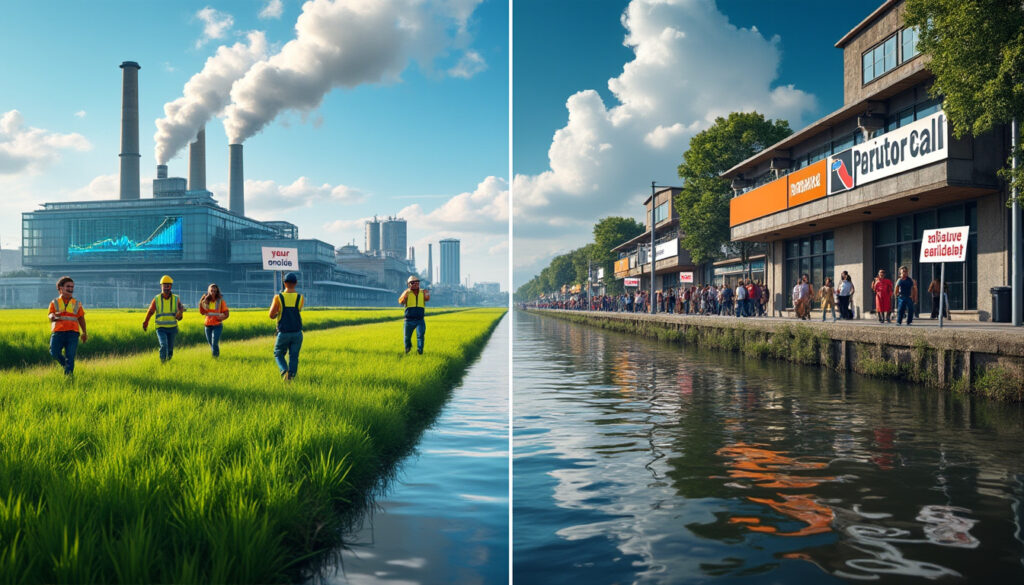
While predominantly negative, some unexpected positive environmental impacts were observed, such as a significant reduction in greenhouse gas emissions and improved air and water quality in many regions due to decreased industrial activity and transportation during lockdowns. Some families also reported increased bonding time.
How did COVID-19 impact global education systems?
Educational systems worldwide faced unprecedented closures, forcing a rapid shift to online learning. This move exposed a significant digital divide, with many students lacking access to necessary technology and resources, leading to learning loss and increased stress for both students and educators.
What long-term lessons has the economy learned from COVID-19?
The pandemic highlighted the need for more resilient supply chains, diversified economic structures, and adaptable financial strategies. It underscored the importance of government support for businesses and individuals during crises, and the acceleration of digital transformation across all sectors.