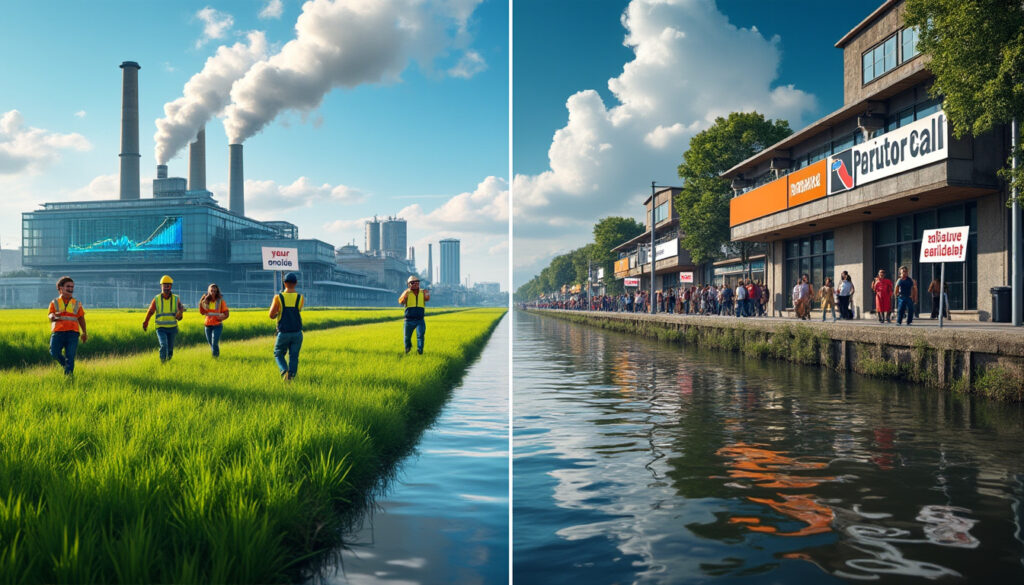
Have you ever walked down a high street and seen a Starbucks, a Samsung showroom, or a Hyundai car dealership? Or perhaps you’ve heard about a massive new factory being built on the outskirts of your city by a foreign company? This is Foreign Direct Investment, or FDI, in action. Unlike merely buying a few shares of a company’s stock—known as Foreign Portfolio Investment (FPI)—FDI is the real deal. It signifies a significant, long-term commitment by a company from one country to build, buy, or control business operations in another, truly setting down roots.
For decades, countries, especially developing ones, have eagerly rolled out the red carpet for FDI, viewing it as a golden ticket to faster economic development. It promises an influx of jobs, capital, and futuristic technology. Yet, like any powerful tool, it’s not without its inherent risks. Inviting such influential global players into a nation’s “home” economy can quickly become a complex balancing act. Is FDI an unstoppable engine of growth, or does it come with hidden costs that could potentially undermine local industries and a nation’s control over its own destiny? Let’s dive deep into the very real pros and cons of this global economic force, exploring its profound impact on both burgeoning and established economies.
In Brief:
- Foreign Direct Investment (FDI) represents a long-term, controlling investment by a foreign entity in a host country’s business interests.
- It fundamentally differs from Foreign Portfolio Investment (FPI) by involving active management and a lasting strategic commitment.
- FDI injects substantial capital, significantly boosting economic growth and contributing to a nation’s Gross Domestic Product (GDP).
- Beyond creating jobs, FDI facilitates technology transfer and skill development, upgrading the local workforce.
- It often drives crucial infrastructure development and can bolster a country’s exports and currency stability.
- Key drawbacks include the potential loss of economic sovereignty and local control over strategic industries.
- Profit repatriation by multinational corporations (MNCs) can lead to a “leaky bucket” effect, limiting local reinvestment.
- The “race to the bottom” phenomenon might see countries relaxing environmental or labor standards to attract FDI, incurring long-term costs.
- Host countries can become vulnerable to economic shocks if foreign investors withdraw operations due to instability.
- Strategic policy-making is essential for nations to maximize the benefits of FDI while actively mitigating its inherent risks and protecting national interests.
Understanding Foreign Direct Investment: A Global Economic Force
Foreign Direct Investment is more than just money moving across borders; it’s a strategic commitment that reshapes economies. It stands as a cornerstone of the modern globalized marketplace, influencing everything from job creation to technological advancement. When a foreign entity, be it a company or an individual, makes an FDI, they are acquiring a significant stake in a foreign business, typically implying a degree of active management and long-term engagement. This differs markedly from Foreign Portfolio Investment, where investors might merely purchase stocks or bonds without seeking operational control.
The Defining Characteristics: Control and Lasting Interest
Two fundamental features unequivocally define FDI: control and lasting interest. Control signifies the investor’s intent to actively participate in the management and strategic direction of the foreign enterprise. This influence is generally established when an investor acquires at least 10% of the voting power or ownership stake, moving beyond passive ownership. Complementing this, lasting interest underscores the long-term nature of the investment. FDI is not a short-term gamble for quick profits but rather a sustained relationship between the direct investor and the foreign business, reflecting a commitment to growth and stability that benefits the host country through continuous capital inflow and skill transfer.
Navigating the Landscape: Different Types of FDI
FDI isn’t a singular concept; it manifests in various strategic forms. Horizontal FDI involves a company investing in a foreign firm within the same industry, essentially duplicating its home operations to expand market presence, much like a German automaker opening a new plant in the United States. Vertical FDI occurs when an investment is made within the supply chain, either backward (acquiring a raw material supplier, like a coffee company investing in plantations in Brazil) or forward (investing in distribution networks closer to the consumer). Conglomerate FDI, the least common, sees investment in a foreign business entirely unrelated to the core operations, driven by diversification goals. Lastly, Platform FDI involves setting up operations in a foreign country to produce goods primarily for export to a third country, leveraging favorable local conditions.
Entry Strategies: Building Anew or Acquiring Existing Ventures
Once a company decides on an FDI strategy, it chooses how to enter the foreign market. Greenfield investment is when a parent company establishes entirely new operational facilities from scratch in a foreign country, constructing factories, offices, and distribution centers. This method is often favored in developing countries as it directly creates new jobs, introduces advanced technologies, and contributes significantly to infrastructure development, much like McDonald’s or Domino’s establishing new outlets in a burgeoning market. Alternatively, brownfield investment, more commonly known as cross-border mergers and acquisitions (M&A), involves purchasing or leasing existing facilities. This offers a quicker market entry, allowing the investing company to rapidly gain access to an established market share, customer base, and brand recognition, and is particularly dominant in developed nations. Joint ventures, where two or more parties pool resources, offer a collaborative path, leveraging local expertise in markets with high cultural or regulatory barriers.
The Powerful Catalysts: Unlocking Economic Benefits Through FDI
When a nation actively opens its doors to FDI, it anticipates a ripple effect of positive outcomes. Governments frequently court multinational corporations (MNCs) with incentives like tax breaks and special economic zones, recognizing the transformative potential these investments hold for their economies. The allure is undeniable, given the significant rewards that can unfold.
Fueling Growth: Capital Inflows and GDP Expansion
The most immediate and impactful benefit of FDI is a substantial injection of capital. When a foreign company commits billions to build a manufacturing plant, that capital directly floods into the host economy. Unlike “hot money” that can be withdrawn swiftly, this is “sticky capital,” deeply invested in physical assets. This direct capital infusion significantly fuels Gross Domestic Product (GDP) by spurring more economic activity, production, and service delivery. For nations striving for economic advancement, FDI acts as a crucial engine. Initiatives like India’s ‘Make in India’ program, for example, heavily rely on FDI to bolster its manufacturing sector and achieve ambitious growth targets, demonstrating how targeted investment can catalyze national development.
Beyond Employment: Enhancing Skills and Driving Innovation
While new factories and offices directly create employment—from construction workers to engineers and managers—the true, long-term value extends far beyond mere job numbers. The real benefit lies in the quality of these jobs and their invaluable ‘spillover’ effect. Multinational corporations bring with them not just capital, but also advanced technology, modern management techniques, and global best practices. Consider Priya, a software engineer who might transition from a local firm to a German automotive giant’s R&D center established in her city. Suddenly, she’s working on cutting-edge AI for automated driving systems, absorbing world-class quality control and project management methodologies. This is technology transfer in action, actively building ‘human capital’ by upskilling the workforce. Years later, Priya might even start her own consultancy, disseminating this expertise throughout other local businesses. Furthermore, the dynamism introduced by new foreign entrants can stimulate local companies to invest in similar advancements or to seek out skilled individuals, creating a more competitive and innovative environment. A robust inflow of FDI can also expand opportunities for investors in secondary market securities, as the growth of local companies and new ventures increases the pool of tradable assets.
Strengthening Foundations: Infrastructure and Global Trade
A large-scale foreign enterprise cannot operate effectively in isolation; it requires robust infrastructure. To run a massive manufacturing plant, for instance, reliable power, clean water, efficient transportation routes, and well-equipped ports are essential. If the host country’s existing infrastructure is inadequate, the foreign investor might directly fund upgrades or even build new facilities. The mere presence and the significant tax revenues generated by these investments often compel governments to prioritize and accelerate infrastructure projects. A new port built to serve an FDI-funded export zone, for example, inevitably benefits local farmers and small businesses by providing them easier access to global markets. This FDI-driven infrastructure development creates positive ripple effects across the entire economy. Moreover, many foreign investors establish operations in host countries to leverage lower labor costs or access to raw materials, using the location as an export base. This brings in valuable foreign exchange, stabilizes and strengthens the host country’s currency, making essential imports more affordable, and significantly boosts the nation’s Balance of Payments.
The Intricate Challenges: Navigating the Downsides of FDI
While the promise of economic prosperity from FDI is undeniably tempting, it is not a simplistic solution. The same powerful forces that enable it to build and grow can also introduce significant challenges, which is why every nation, including those actively seeking investment, implements specific rules and caps on foreign ownership in critical or “sensitive” sectors.
The Sovereignty Question: Balancing Control and Foreign Influence
Perhaps the most profound long-term concern is the potential erosion of economic sovereignty. When foreign companies dominate a key sector, crucial decisions affecting that industry are no longer made locally. Instead, they originate in boardrooms thousands of miles away, guided by a global corporate strategy that might not align with the host country’s national interests or developmental goals. Imagine a scenario where a country’s entire telecommunications network or essential power grid is predominantly foreign-owned; critical decisions regarding pricing, investment in rural areas, or even data privacy could fall outside governmental control. On a smaller, yet equally impactful scale, unchecked FDI in sectors like retail can severely impact small, local businesses. A neighborhood *kirana* store, for example, simply cannot compete with the massive purchasing power and deep discounts offered by a global hypermarket chain, leading to the gradual displacement of local enterprises and the unique economic ecosystems that sustain them.
Economic Leakage: The Reality of Profit Repatriation
Multinational corporations are not charitable organizations; they invest to generate profits for their shareholders back home. A substantial portion of the earnings generated within the host country is frequently “repatriated”—sent back to the parent company. While this is a normal business practice, it can become problematic if the outflow is disproportionately large. One might visualize the economy as a bucket: FDI pours water in, but profit repatriation creates a continuous leak. If this leakage is excessive, the host country is not fully capturing the economic value created on its soil. This ‘profit leakage’ represents capital that is not being reinvested locally to build more factories, fund further research and development, or increase local wages, creating a persistent drain on the national economy.
Environmental and Social Costs: The “Race to the Bottom”
In their eagerness to attract foreign investment, developing countries can sometimes find themselves engaged in a “race to the bottom.” To appear more ‘business-friendly’ than their regional neighbors, governments might be tempted to relax environmental laws, weaken pollution standards, or dilute labor regulations. A foreign company seeking to establish a chemical plant or a mining operation might deliberately choose the country with the most lenient rules to cut costs. This can lead to disastrous long-term consequences, including polluted rivers, widespread deforestation, and unsafe working conditions. While the host country gains the initial investment, it is often left with a significant clean-up bill and public health crises that could ultimately cost far more than the FDI was ever worth, a severe risk highlighted by international organizations like the OECD.
Vulnerability to External Shocks: When Investments Shift
Though FDI is generally considered “stickier” than portfolio investment, it is by no means permanent. If the host country’s economy experiences instability—perhaps due to high inflation, political unrest, or unfavorable changes in tax laws—multinational corporations can, and often do, withdraw their operations. Given their global presence, these companies can often shift production to another, more stable country. Such withdrawals can be devastating for the host nation, leading to sudden, large-scale job losses, leaving behind empty factories, and fracturing established supply chains. This creates a dangerous dependency, where the host country’s policies can inadvertently become “hostage” to the demands and preferences of foreign investors. When considering the stability of investments, understanding portfolio size needs becomes crucial, as diversification can help mitigate risks associated with FDI volatility for individual investors.
Protecting Intellectual Assets: A Double-Edged Sword
Intellectual property (IP) represents a complex, two-sided challenge in the context of FDI. On one hand, foreign companies are often hesitant to introduce their most advanced and newest technologies into a country if its IP laws are perceived as weak, fearing that their patents and trade secrets could be stolen. This apprehension can significantly limit the potential benefits of ‘technology transfer.’ Conversely, powerful multinational corporations can leverage their vast legal resources to stifle local innovation. They might acquire promising local startups only to dissolve them (a practice known as a “killer acquisition”) or use their extensive patent portfolios to sue smaller, local competitors out of business, thereby ensuring their continued market dominance and suppressing domestic entrepreneurial growth.
Charting a Course: Maximizing Benefits and Mitigating Risks
Ultimately, Foreign Direct Investment is a powerful and intricate force—a true double-edged sword. It offers a clear pathway to much-needed capital, cutting-edge technology, and robust job creation, yet it absolutely demands careful and strategic management. For any nation, the overarching goal must be to act as a “smart host.”
Becoming a “Smart Host”: Crafting Prudent FDI Policies
To effectively harness FDI, countries must establish clear, strong, and fair rules that attract the *right kind* of investment. This involves creating a regulatory framework that encourages economic growth while simultaneously safeguarding the nation’s environment, protecting vital local industries, and maintaining its economic independence. It is not about completely opening the doors or shutting them tight; rather, it is about constructing a robust framework equipped with a selective lock, ensuring that investments align with national development objectives. This proactive approach helps to maximize the positives while actively minimizing the negatives.
Vietnam’s Experience: A Framework for Balanced FDI Integration
Vietnam stands as an excellent case study in successfully navigating FDI. Thanks to its rapid economic growth and strategic geographical location, the country has become a prime destination for foreign investment. However, establishing a company in Vietnam requires investors to adeptly navigate a specific legal framework, primarily governed by the Law on Investment and the Law on Enterprises. These laws have been progressively updated to cultivate an increasingly favorable environment for foreign investors while maintaining essential national safeguards. Foreign investors have several choices for business entities, with the Limited Liability Company (LLC) being the most popular due to its flexibility. The process typically involves a two-step licensing procedure, starting with the Investment Registration Certificate (IRC) from the Department of Planning and Investment (DPI), followed by the Enterprise Registration Certificate (ERC), which officially establishes the company. Critical considerations include understanding market access conditions for specific sectors, ensuring sufficient proposed capital, and completing post-licensing procedures like opening a Direct Investment Capital Account (DICA) and registering for taxes. Vietnam’s approach demonstrates how a country can strategically integrate FDI to fuel its development while managing its complexities.
What is the primary difference between Foreign Direct Investment (FDI) and Foreign Portfolio Investment (FPI)?
FDI involves a significant, long-term investment that grants the investor a degree of control or influence over the foreign enterprise, typically through at least 10% ownership. FPI, conversely, is a more passive investment, such as purchasing stocks or bonds, without any intent to manage or control the company.
How does FDI contribute to a host country’s economic growth?
FDI boosts economic growth by injecting new capital into the economy, which can fund new factories, services, and infrastructure projects. This directly increases Gross Domestic Product (GDP), creates jobs, facilitates technology transfer, and enhances the skills of the local workforce, leading to a broader economic stimulus.
What are some key risks a host country faces from extensive FDI?
Key risks include a potential loss of economic sovereignty, where critical decisions are made by foreign entities based on their global strategies, not local interests. There’s also the ‘profit repatriation’ issue, where a significant portion of profits leaves the host country, and the risk of a ‘race to the bottom’ where environmental or labor standards are lowered to attract investment. Host countries can also become vulnerable to capital flight if economic or political instability arises.
Can FDI negatively impact local businesses?
Yes, especially in sectors like retail, where large foreign hypermarket chains can leverage immense purchasing power and deep discounts to outcompete and displace smaller local businesses. This can lead to the erosion of local entrepreneurial ecosystems and a loss of community-based commerce.
What does it mean for a country to be a ‘smart host’ in relation to FDI?
Being a ‘smart host’ means a country proactively establishes clear, strong, and fair regulations for FDI. This strategy aims to attract beneficial investments that align with national development goals while actively protecting local industries, environmental standards, and economic sovereignty, effectively balancing opportunities with safeguards.